

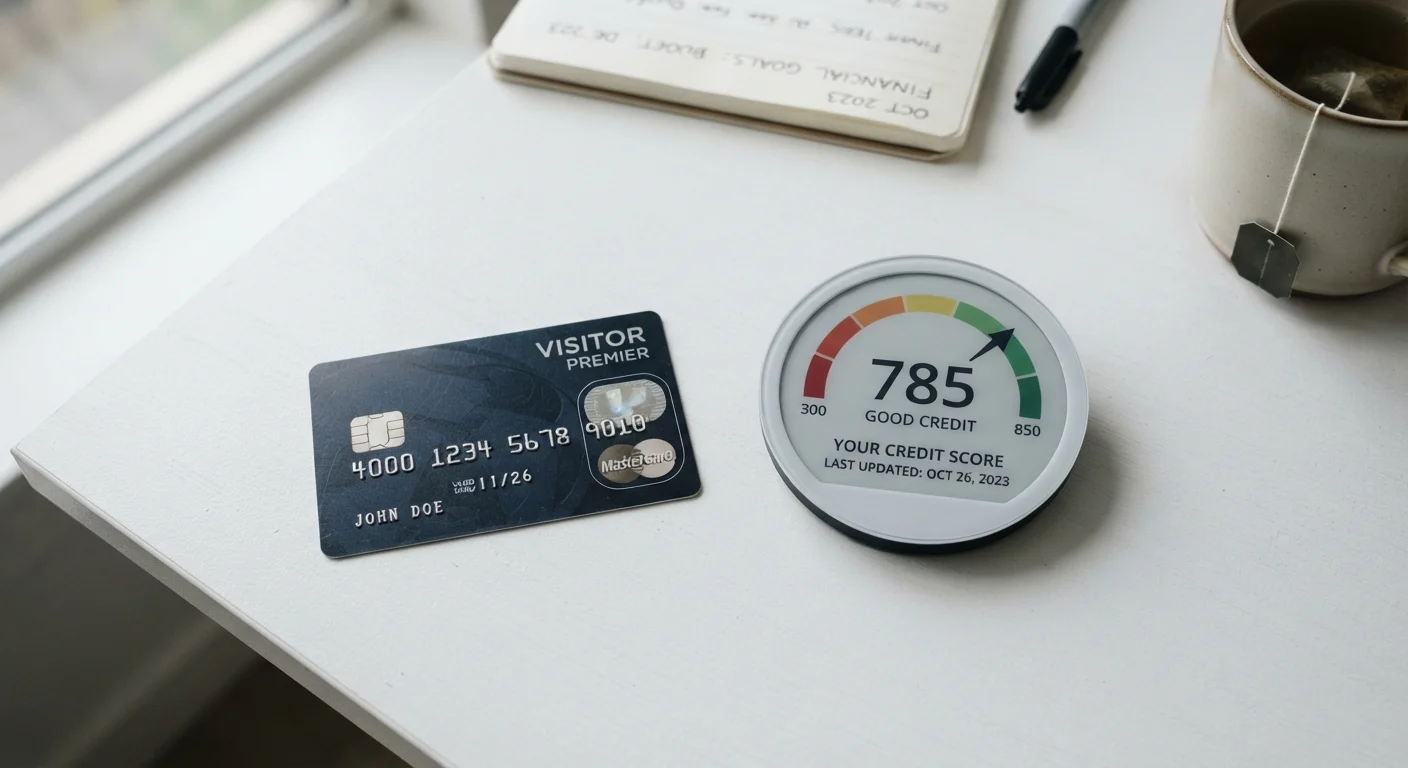
Several common beliefs about credit scores are simply wrong, and acting on them can slow your progress.
Carrying a balance does not help your score, and checking your own credit does not hurt it. Get the facts behind the most common credit misconceptions.
Why these myths stick around
Credit scores affect loan approvals, interest rates, apartment applications, and sometimes even job offers. Yet many people operate on half-remembered rules or advice that was never accurate. Acting on these misconceptions can slow progress or cause real, lasting damage to a credit profile.
The five myths below are among the most common. Each one has a clear, verifiable correction based on how credit scoring models actually work. For a broader look at what goes into a credit file, see what a credit report actually contains.
This article is general financial information and education, not personalized financial advice. For guidance on your own credit situation, consult a licensed financial professional.
Myth
Carrying a small balance on your credit card each month helps build your credit score.
Fact
Carrying a balance does not improve your score. It only costs you interest charges.
This myth likely comes from confusing "using credit" with "carrying debt." Scoring models reward you for using a card and paying it off, not for leaving a balance. What matters is that you use the account and that your payment is made on time. Paying your statement in full each month keeps your utilization low and costs you nothing extra.
Myth
Checking your own credit score or credit report will lower your score.
Fact
Checking your own credit is a "soft inquiry" and has no effect on your score whatsoever.
Credit inquiries fall into two types. A hard inquiry happens when a lender checks your credit as part of an application decision; multiple hard inquiries in a short period can cause a small, temporary dip. A soft inquiry, which includes checking your own report, does not affect your score at all. You can check your credit as often as you want without any scoring consequence. In fact, reviewing your report regularly is one of the most practical ways to catch errors or signs of fraud early.
Myth
Closing a credit card you no longer use will help your credit score.
Fact
Closing an account usually lowers your score by reducing your total available credit and potentially shortening your credit history.
When you close a card, you lose that account's credit limit from your total available credit. If you carry balances on other cards, your overall utilization ratio goes up, which can pull your score down. Older accounts also contribute to the length of your credit history, another scoring factor. If a card has no annual fee, keeping it open and using it occasionally is generally better for your score than closing it.
Myth
A higher income leads to a higher credit score.
Fact
Income is not part of any credit score calculation. Scores measure credit behavior, not earnings.
Lenders may consider income separately when evaluating a loan application, but that figure never enters a credit score. Two people with identical incomes can have very different scores based on payment history and utilization, and two people with very different incomes can have identical scores. What drives your score is how consistently you pay on time and how much of your available credit you use at any given point.
Myth
One missed payment is not a big deal and will fall off quickly.
Fact
A single missed payment can stay on your credit report for up to seven years and cause a noticeable score drop.
Payment history carries the largest weight in most scoring models. A payment reported as 30 or more days late can lower a good score by a significant number of points, with the exact impact depending on the rest of your credit profile. The negative mark does not disappear quickly: it can remain for seven years from the original delinquency date. The best protection is setting up automatic minimum payments so a missed due date does not happen by accident.
[warning_callout]What actually moves your score
Credit scores are calculated using five general categories. Payment history carries the most weight, followed by credit utilization (how much of your available credit you are using), length of credit history, credit mix, and new credit inquiries. Income, employment status, and carrying a balance do not appear in the calculation.
35%
Weight of payment history in FICO score
According to FICO, payment history is the single largest factor in the standard FICO credit score calculation.
30%
Weight of credit utilization in FICO score
FICO identifies amounts owed, including utilization ratio, as the second largest scoring factor after payment history.
7 years
How long a missed payment stays on a credit report
Under the Fair Credit Reporting Act, most negative information, including late payments, can remain on a credit report for up to seven years.
Keeping utilization below 30% of your total credit limit is a widely cited guideline. Paying your statement balance in full each month achieves that without costing you interest. If you are thinking about how debt restructuring might interact with your credit profile, the trade-offs of debt consolidation are worth understanding before you act.
The content provided on our blog site traverses numerous categories, offering readers valuable and practical information. Readers can use the editorial team’s research and data to gain more insights into their topics of interest. However, they are requested not to treat the articles as conclusive. The website team cannot be held responsible for differences in data or inaccuracies found across other platforms. Please also note that the site might also miss out on various schemes and offers available that the readers may find more beneficial than the ones we cover.