
In-Home Care vs. Assisted Living: Weighing the Real Trade-Offs

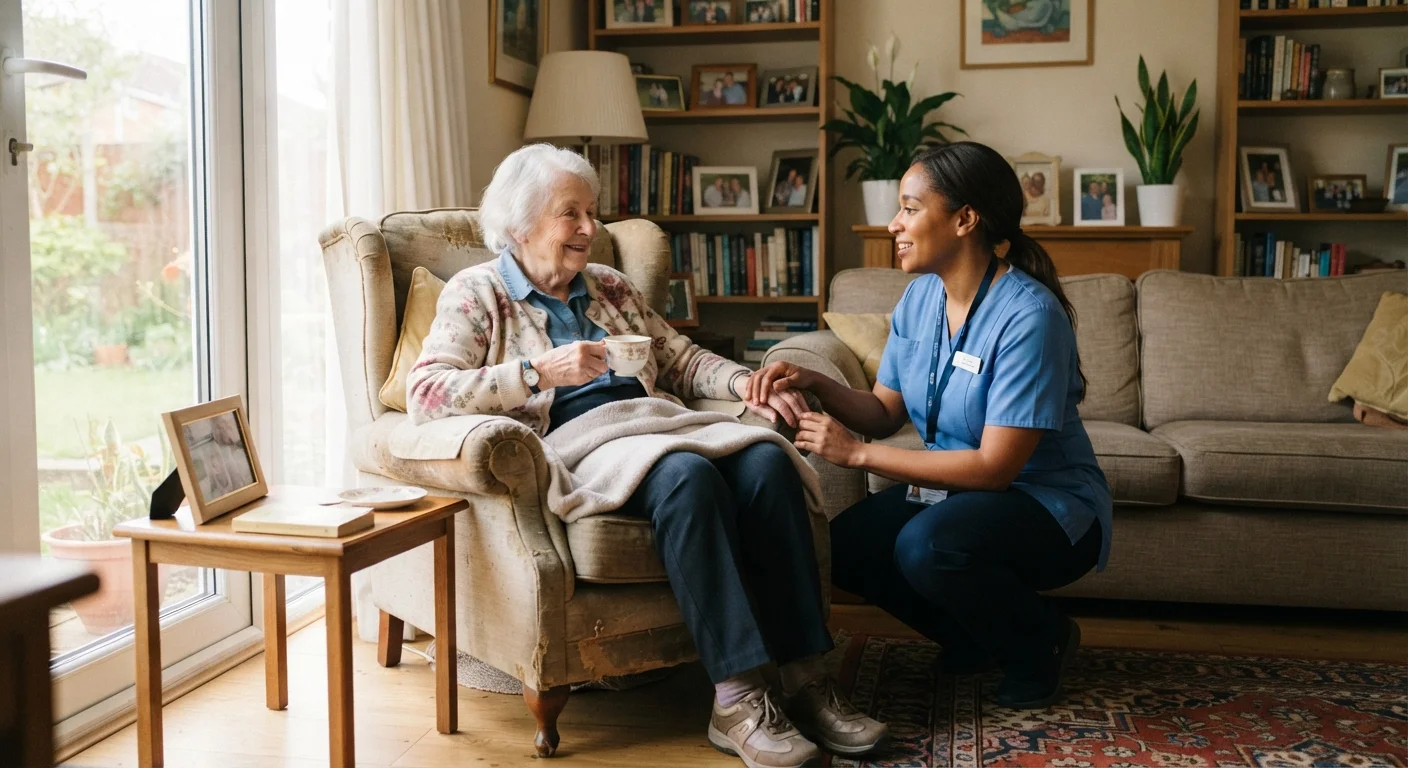
Compare in-home care and assisted living across cost, independence, medical support, and social factors to understand what fits different needs.
Our Verdict
In-home care suits people who have moderate care needs, strong informal support, and a strong preference for staying in their own home. Assisted living better fits those who need daily assistance across multiple tasks, would benefit from built-in social contact, or whose home cannot be safely adapted. Neither option is universally superior; the fit depends on the individual's health, finances, and priorities.
| Best for | Recommended |
|---|---|
| Those with moderate needs and reliable family or caregiver backup | In-home care |
| Those needing help with several daily activities and social engagement | Assisted living |
| People with cognitive decline requiring structured supervision | Assisted living |
| People whose home can be adapted and who have coordinated care plans | In-home care |
What each option actually provides
In-home care covers a range of services delivered where a person already lives. Personal care aides help with bathing, dressing, and meals. Home health aides can assist with certain medical tasks under a care plan. Skilled nursing visits, physical therapy, and other clinical services may also come to the home, usually on a scheduled basis rather than around the clock.
Assisted living is a residential setting where staff are on-site at all times. Residents typically have a private or semi-private apartment and receive help with daily activities such as medication management, grooming, and meals served in a communal dining room. Medical care at this level is supportive rather than clinical; a facility with skilled nursing on-site is a different category. See the senior living options reference guide for a full breakdown of care levels across the spectrum.
Cost structure and what insurance covers
Costs for both options depend heavily on geography, the intensity of care needed, and the specific provider. In-home care is often billed by the hour, which can be affordable for a few hours a week but add up quickly if round-the-clock support is needed. Assisted living is usually charged as a monthly base rate plus add-on fees for extra services.
Medicare covers short-term skilled home health care after a qualifying hospital stay, and it covers short-term stays in skilled nursing facilities under specific conditions. It does not pay for ongoing custodial care, whether at home or in a residential facility. Medicaid may cover long-term care in either setting depending on the state and whether a person meets financial and functional eligibility requirements. The rules are more complex than many families expect. The article common misconceptions about Medicaid and long-term care covers those details carefully.
Long-term care insurance, if purchased earlier in life, may offset costs in both settings. Coverage decisions made years before care is needed can have lasting effects; coverage decisions that often catch seniors off guard addresses situations where gaps appear unexpectedly.
| Factor | In-home care | Assisted living | |
|---|---|---|---|
| Living environment | Person's own home | Residential facility apartment | |
| Staff availability | Scheduled hours; not always 24/7 | On-site staff around the clock | |
| Social contact | Depends on personal network | Built-in communal activities | |
| Cost structure | Hourly rate; variable total | Monthly base rate plus add-ons | |
| Medicare coverage | Short-term skilled care only | Limited; skilled nursing only short-term | |
| Home modification needed | Often yes (grab bars, ramps) | No; facility is already adapted | |
| Transition disruption | Minimal; person stays put | Significant; full relocation required |
Independence, safety, and social factors
Staying at home preserves familiar routines, relationships with neighbors, and control over daily life. For many older adults, that continuity has real psychological value. The trade-off is that safety depends on the home's physical layout and the reliability of scheduled caregivers. Falls, medication errors, and social isolation are genuine risks when professional presence is limited to certain hours.
Assisted living reduces some of those risks by design. Staff are available continuously, common areas encourage interaction, and organized activities give structure to the day. For people experiencing loneliness or early cognitive changes, that environment can support wellbeing in ways that hourly home visits cannot. However, the transition to a new residence is itself a significant adjustment, and not everyone adapts comfortably to communal living.
Ask about staff ratios and turnover
When evaluating an assisted living facility, ask how many residents each aide is responsible for during evening and overnight shifts. Also ask about staff turnover rates. Consistency in caregivers tends to correlate with better day-to-day care and faster recognition of changes in a resident's condition.
How to think through the decision
A realistic assessment starts with a clear picture of current and likely future needs. A geriatric care manager or the person's primary care physician can help evaluate functional status and identify what level of support is genuinely required. That assessment is worth having before comparing costs, because the right care level narrows the realistic options considerably.
Family availability matters too. In-home care often works best when family members can fill gaps between scheduled visits, handle coordination, and notice when needs change. If that backup is limited or geographically distant, a residential setting with consistent staffing may be more appropriate even if the person is otherwise capable of living semi-independently.
Financial planning for either path takes time. The long-term care planning starter framework walks through the steps for assessing needs and exploring funding options before a crisis forces a hasty choice.
This article provides general information only and is not a substitute for advice from a licensed healthcare professional, social worker, or financial adviser. Individual circumstances vary, and readers should consult qualified professionals before making care decisions.
The content provided on our blog site traverses numerous categories, offering readers valuable and practical information. Readers can use the editorial team’s research and data to gain more insights into their topics of interest. However, they are requested not to treat the articles as conclusive. The website team cannot be held responsible for differences in data or inaccuracies found across other platforms. Please also note that the site might also miss out on various schemes and offers available that the readers may find more beneficial than the ones we cover.