
Before You Book: A Pre-Trip Insurance Checklist for Travelers

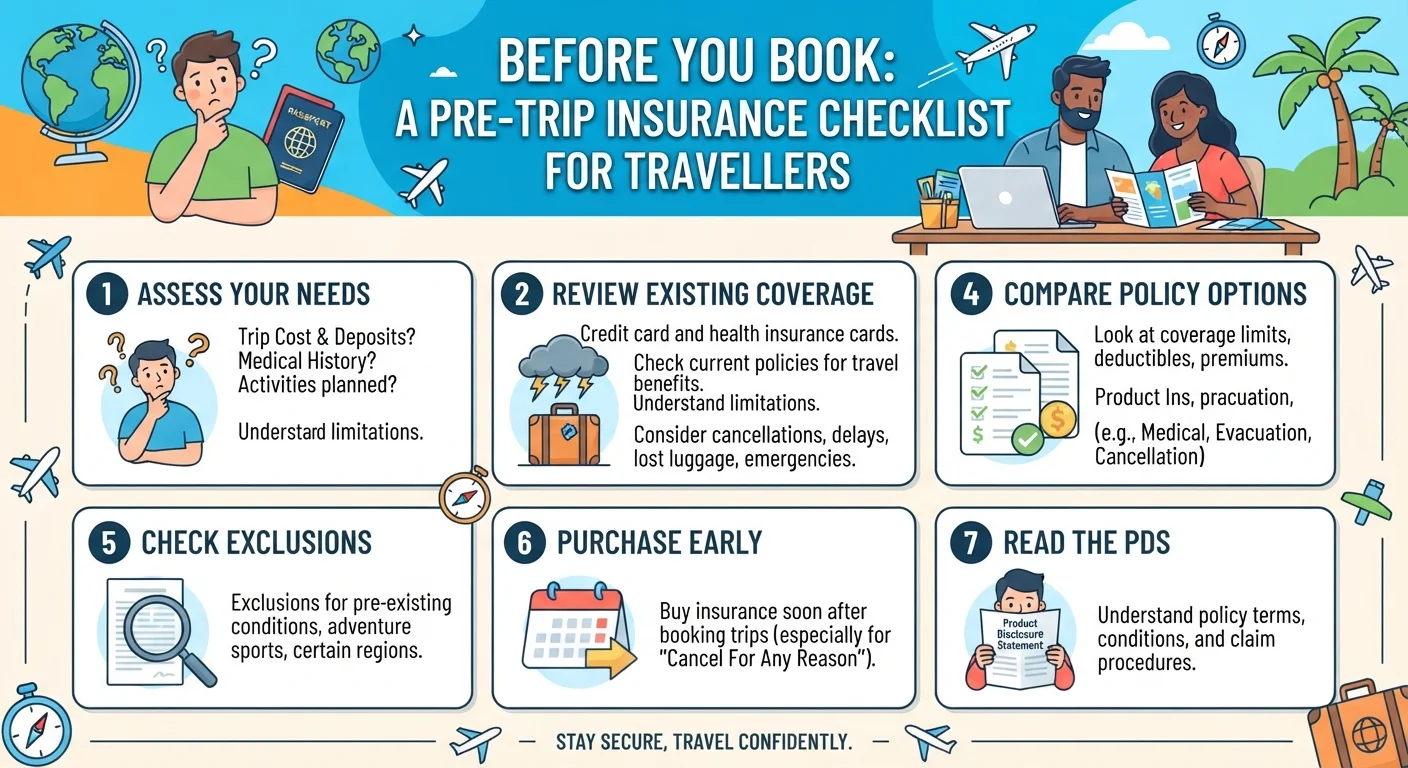
Use this step-by-step checklist to review your coverage gaps, understand policy timing, and make sure your trip is protected before you leave.
Summary
18 items · 20 to 35 minutes
Why timing is the first thing to check
Most travelers shop for travel insurance the week before departure, which is too late to access several important benefits. Policies with pre-existing condition waivers, cancel for any reason upgrades, and certain "cancel for work reasons" clauses typically require purchase within 10 to 21 days of your initial trip deposit. That window varies by policy, but once it closes, those options are gone regardless of what you pay.
Common misconceptions about travel insurance often start here: travelers assume they can add coverage at any point, then discover the most useful protections expired weeks earlier.
Before reviewing any other part of this checklist, confirm the date you paid your first trip deposit and check how many days have passed. That single fact determines which policy features are still available to you.
Pre-existing condition waivers expire quickly
Most policies that offer a pre-existing condition waiver require you to purchase the policy within 10 to 21 days of your first trip deposit. If you buy the policy after that window closes, the waiver is unavailable regardless of your health status or the type of condition. Travelers with any ongoing health concern should check this deadline before anything else.
The checklist
Work through these items in order. The first two groups cover decisions that have deadlines; the later groups can be completed closer to your departure date.
Timing and purchase window
Medical and health coverage
Trip cancellation and interruption
Baggage and travel delay
Existing coverage you may already have
Final pre-departure review
Reading what the policy actually says
Insurance summaries and marketing pages describe coverage in general terms. The certificate of insurance or policy document, usually a PDF of 20 to 40 pages, contains the exact definitions, exclusions, and conditions that determine whether a claim is paid.
Two sections matter most. First, the definitions section: words like "trip," "covered reason," "common carrier," and "pre-existing condition" have specific meanings inside the policy that may differ from everyday usage. Second, the exclusions section: this lists what the policy does not cover, and it is frequently longer than the coverage section itself.
Pre-existing condition rules in travel insurance are among the most misunderstood exclusions. A condition does not have to be formally diagnosed to trigger an exclusion; some policies look back 60 to 180 days at any symptom, test, or medication change.
If a coverage description in the summary uses the phrase "as defined in the policy," read that definition before assuming you qualify. Protection plans offered at checkout by airlines and booking sites often use narrower definitions than standalone policies, which is worth comparing before you decide.
This article is for general informational purposes only and does not constitute insurance, legal, or financial advice. Coverage terms, exclusions, and eligibility vary by policy and provider. Read your full policy documents and consult a licensed insurance professional for guidance specific to your situation.
The content provided on our blog site traverses numerous categories, offering readers valuable and practical information. Readers can use the editorial team’s research and data to gain more insights into their topics of interest. However, they are requested not to treat the articles as conclusive. The website team cannot be held responsible for differences in data or inaccuracies found across other platforms. Please also note that the site might also miss out on various schemes and offers available that the readers may find more beneficial than the ones we cover.