
Usage-Based Insurance Programs: How They Work and What They Track

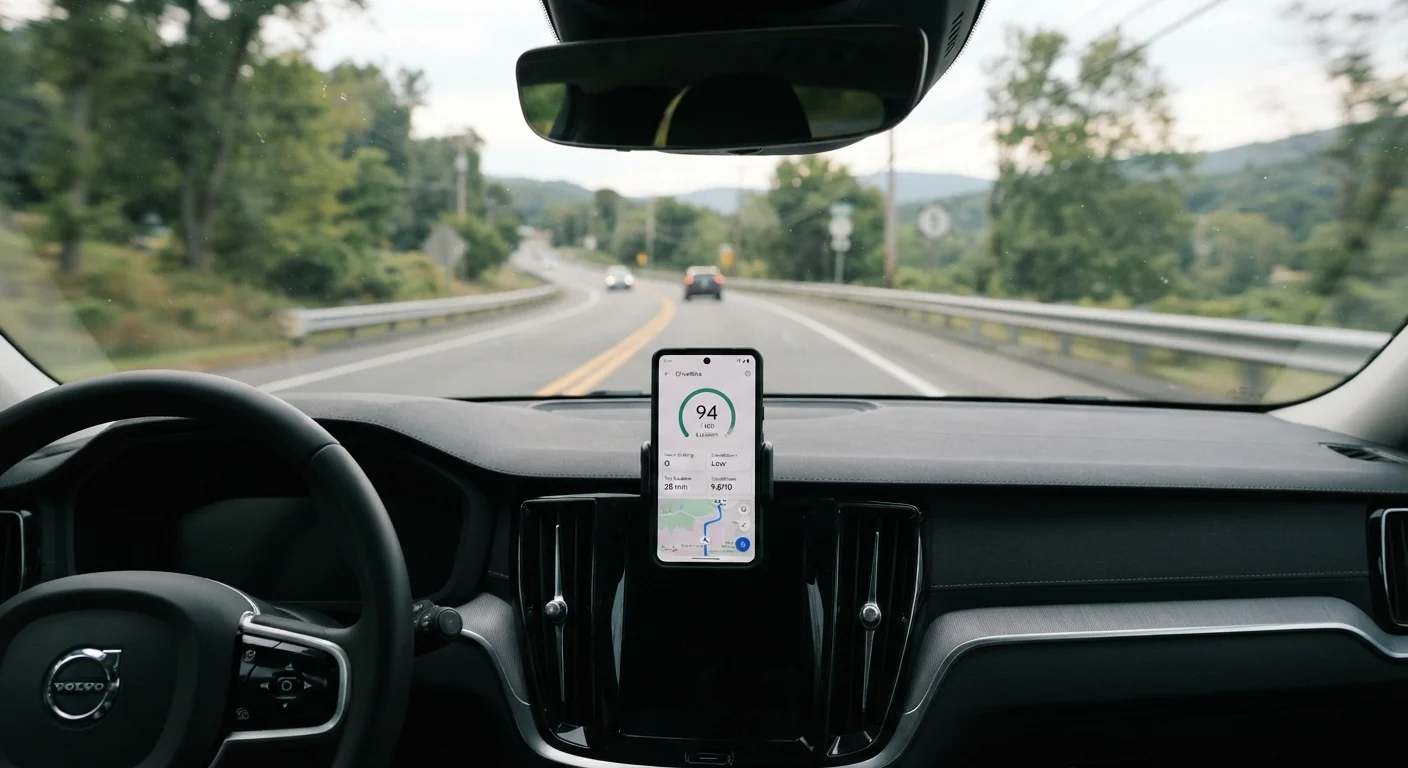
Usage-based insurance programs use an app or device to monitor driving behavior and adjust premiums accordingly.
Pay-per-mile and telematics programs tie your rate to your driving habits. This article explains the data collected and what drivers gain or give up.
Our Verdict
Usage-based insurance can lower costs for drivers who put on few miles or consistently drive smoothly. For drivers with long commutes, irregular schedules, or night-shift work, the same programs can produce higher rates than a standard policy would. The privacy trade-off is real: you are sharing detailed location and behavior data with your insurer.
Drivers who work from home or commute rarely, have predictable daytime driving patterns, and are comfortable sharing telematics data with their insurer.
What usage-based insurance actually is
Standard auto insurance prices your policy using factors like your age, zip code, credit history, and driving record. Usage-based insurance (UBI) adds a new layer: data from your actual driving. Insurers use that data to adjust your premium based on how much you drive, when you drive, and how safely you drive.
There are two main structures. Pay-per-mile programs charge a base rate plus a per-mile fee, so your bill rises and falls with your odometer. Telematics programs go further, scoring your driving behavior and rewarding or penalizing you based on that score. Some insurers use a plug-in device (usually an OBD-II port connector); others use a smartphone app. A few use factory-installed connected-car systems.
UBI programs are voluntary at enrollment, though some insurers make them the default for new customers. For general context on how auto coverage layers together, see how comprehensive coverage works.
What the data collection covers
The specific data points vary by insurer and program, but most telematics programs collect some combination of the following:
- Miles driven per day or trip
- Time of day (night driving typically scores lower)
- Hard braking and rapid acceleration events
- Sharp cornering
- Phone handling while the vehicle is moving
- Speed relative to posted limits
Location data is collected by most app-based programs because GPS is how trips are measured and mapped. Some programs also detect whether you are the driver or a passenger, though this detection is not always accurate.
Pay-per-mile vs. telematics: a practical difference
Pay-per-mile programs charge based on distance only. Full telematics programs score your driving style in addition to mileage. The two structures carry different data footprints and different risk profiles depending on your driving habits. Some insurers offer both; others offer only one. Ask specifically which type a program is before enrolling.
Pay-per-mile programs generally collect less behavioral data than full telematics programs. If mileage is your main concern and you prefer to share less behavioral data, pay-per-mile may be the narrower option to consider.
Pros of usage-based insurance
Lower premiums for low-mileage drivers
Pay-per-mile pricing directly rewards people who drive infrequently. Someone working from home or using public transit most days pays for the miles they actually put on, rather than being grouped with higher-mileage drivers.
Transparent connection between behavior and price
Telematics scores give you a visible signal about how your driving is rated. Drivers who want to understand why their premium is what it is may find that more concrete than opaque demographic-based pricing.
Potential savings for smooth, daytime drivers
Drivers who brake gently, avoid rapid acceleration, and drive mostly during daylight hours tend to score well in behavior-based programs. Those habits can translate into a lower renewal premium, though outcomes vary by insurer and program.
Introductory discounts at enrollment
Many insurers offer a small discount just for signing up, before any driving data is collected. This can modestly offset the first policy term's cost regardless of how the program ultimately scores you.
This article provides general information about auto insurance program structures and is not personalized insurance, financial, or legal advice. Coverage terms, eligibility, and pricing vary by insurer and state. Read your policy documents carefully and consult a licensed insurance agent for guidance on your specific situation.
Cons of usage-based insurance
Detailed personal data shared with your insurer
GPS location, trip timing, and driving behavior are continuously logged. That data may be stored for years and, depending on the program's terms, shared with third parties or used in ways beyond your initial rate calculation.
Night-shift and long-commute drivers may pay more
Telematics models typically penalize late-night driving and hard braking in stop-and-go traffic. Drivers whose schedules or routes require those conditions may see higher scores that result in higher premiums at renewal.
Scores do not always reflect context
A hard braking event looks the same whether you stopped suddenly to avoid a collision or were driving aggressively. The algorithm does not distinguish between the two, which can produce a lower score for a defensive maneuver.
App-based programs can drain phone battery and require permissions
Smartphone telematics apps run continuously in the background and require location access at all times. Some drivers find the battery impact significant, and granting always-on location access raises ongoing privacy considerations.
Rate increases are possible if scores are poor
Not all programs guarantee a neutral or favorable outcome. Some reserve the right to raise your premium at renewal if your telematics score falls below their threshold, meaning enrollment carries financial risk as well as potential reward.
Drivers whose work involves irregular hours, long commutes, or frequent highway miles may find that a standard policy costs less. It is worth getting quotes under both structures before enrolling. For a broader look at situations where your auto policy may not protect you the way you expect, see when personal auto insurance does not apply.
How to evaluate whether a UBI program fits your situation
Start with your odometer. Drivers who put on fewer than 7,500 miles per year are often cited by insurers as the clearest candidates for pay-per-mile savings, though no specific savings amount is guaranteed.
Then consider your schedule. Night driving, frequent hard-stop traffic, and long highway trips at higher speeds all tend to lower telematics scores. If your commute or job requires those conditions, a behavior-based program may not work in your favor.
Read the program's privacy terms before you enroll. Find out how long data is stored, whether it is shared with third parties, and whether a poor score can raise your rate above what you currently pay. Some programs guarantee your rate will not increase during an initial monitoring period; others do not.
UBI programs sit within the broader universe of insurance pricing decisions that affect your household budget. The same critical reading that applies to insurance products applies to other financial products as well. See the Finance hub for general guidance on how everyday financial products work.
The content provided on our blog site traverses numerous categories, offering readers valuable and practical information. Readers can use the editorial team’s research and data to gain more insights into their topics of interest. However, they are requested not to treat the articles as conclusive. The website team cannot be held responsible for differences in data or inaccuracies found across other platforms. Please also note that the site might also miss out on various schemes and offers available that the readers may find more beneficial than the ones we cover.