

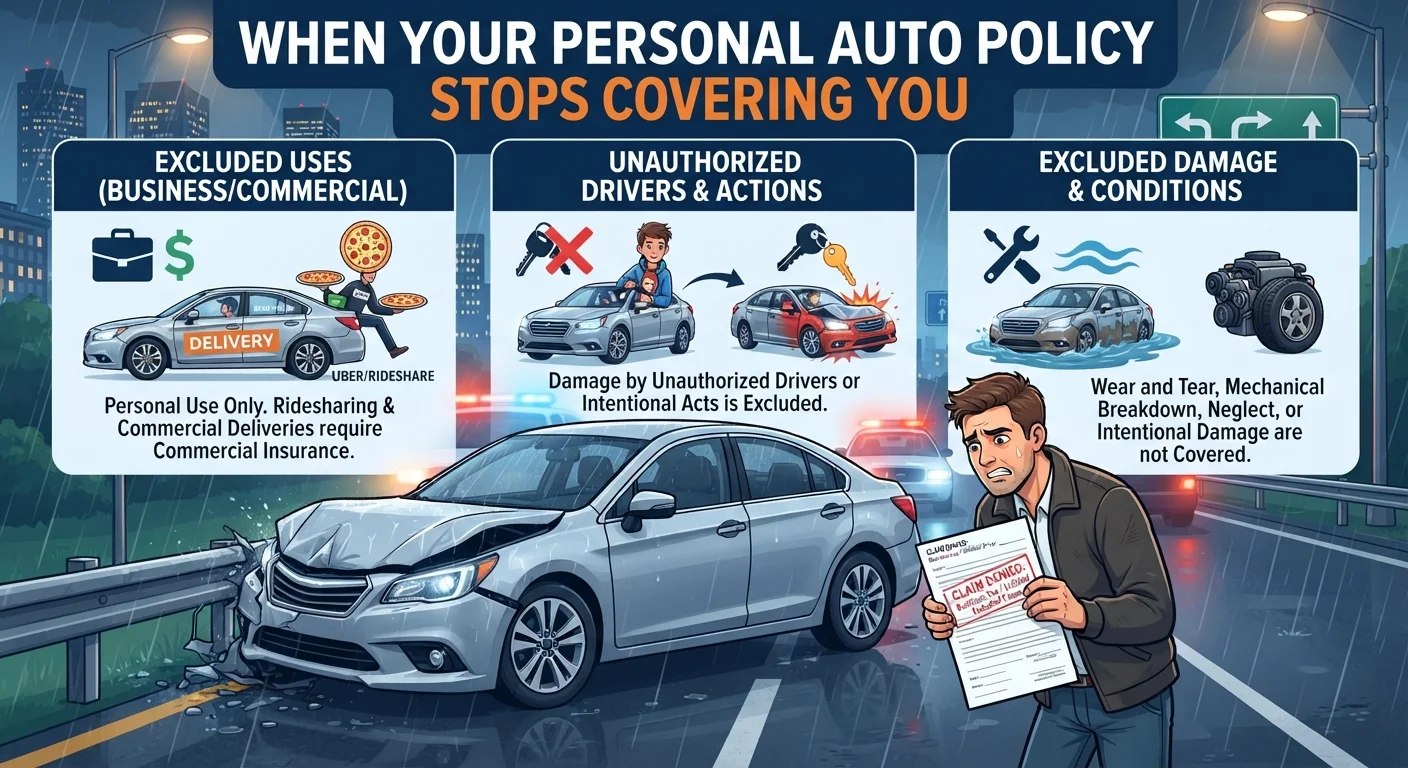
Personal auto policies have more exclusions than most drivers realize.
Personal auto insurance has limits most drivers don't know about. Discover the situations where your policy may not protect you.
What your personal policy is designed to cover
A personal auto insurance policy is written for private, non-commercial use. It covers your car when you drive it for everyday purposes: commuting, running errands, taking road trips. That scope sounds broad, but insurers define it carefully in the policy language, and several common situations fall outside it.
Many drivers find out about these exclusions only after a claim is denied. Reading the declarations page and the exclusions section before something goes wrong is the most direct way to know where you stand. See the policy review checklist for a structured way to go through your coverage before your next renewal.
Common mistakes that leave drivers without coverage
The errors below account for a large share of denied personal auto claims. Each one involves a gap that could be closed with a conversation with your agent or a policy adjustment.
Using your car for rideshare or delivery driving without telling your insurer.
Why it happens: Drivers assume their personal policy covers any trip they take, regardless of whether they are being paid.
Letting someone who is not listed on the policy drive your car regularly.
Why it happens: Most policies do cover occasional permissive use by an unlisted driver, so many people assume any licensed driver is covered any time.
Driving into Mexico without purchasing a separate Mexican auto insurance policy.
Why it happens: Drivers know their U.S. policy covers Canada and assume it covers Mexico the same way.
Assuming a personal policy covers a vehicle used primarily for business purposes.
Why it happens: Many small business owners or self-employed people use the same car for personal and work trips and never separate the two in their coverage.
Overlooking coverage gaps tied to state minimum limits.
Why it happens: Drivers meet the legal minimum requirements and assume they are fully protected, without checking whether those limits are enough to cover real-world damages.
Mexico travel requires a separate policy
U.S. personal auto policies do not cover you in Mexico, and Mexican law requires liability coverage from a Mexican-licensed insurer. Driving across the border without the right policy can leave you personally liable for damages and subject to legal complications under Mexican law. Purchase a separate policy before you cross, not after.
How to know if you need more than a personal policy
If any of the situations in the mistakes section apply to you, start by calling your insurer and asking directly whether your current policy covers that use. Insurers vary in what they will add by endorsement versus what requires a separate commercial policy.
Rideshare drivers, delivery workers, and people who use their car for any compensated transportation should ask about a rideshare endorsement or a transportation network company (TNC) rider. These add-ons fill the gap between personal coverage and the platform's own policy, which typically only applies when you have a passenger in the car or an active trip accepted.
For coverage gaps tied to what your car is worth after a total loss, gap insurance is worth understanding separately. And if you want to know exactly how collision pays out when it does apply, this breakdown of collision coverage explains the mechanics. The same logic applies to comprehensive coverage, which covers theft and weather damage but carries its own exclusions.
This article is for general informational purposes only and is not personalized insurance, legal, or financial advice. Coverage terms, exclusions, and requirements vary by insurer and state. Read your actual policy documents and consult a licensed insurance agent for guidance specific to your situation.
The content provided on our blog site traverses numerous categories, offering readers valuable and practical information. Readers can use the editorial team’s research and data to gain more insights into their topics of interest. However, they are requested not to treat the articles as conclusive. The website team cannot be held responsible for differences in data or inaccuracies found across other platforms. Please also note that the site might also miss out on various schemes and offers available that the readers may find more beneficial than the ones we cover.