
What Collision Coverage Actually Pays For (and What It Doesn't)

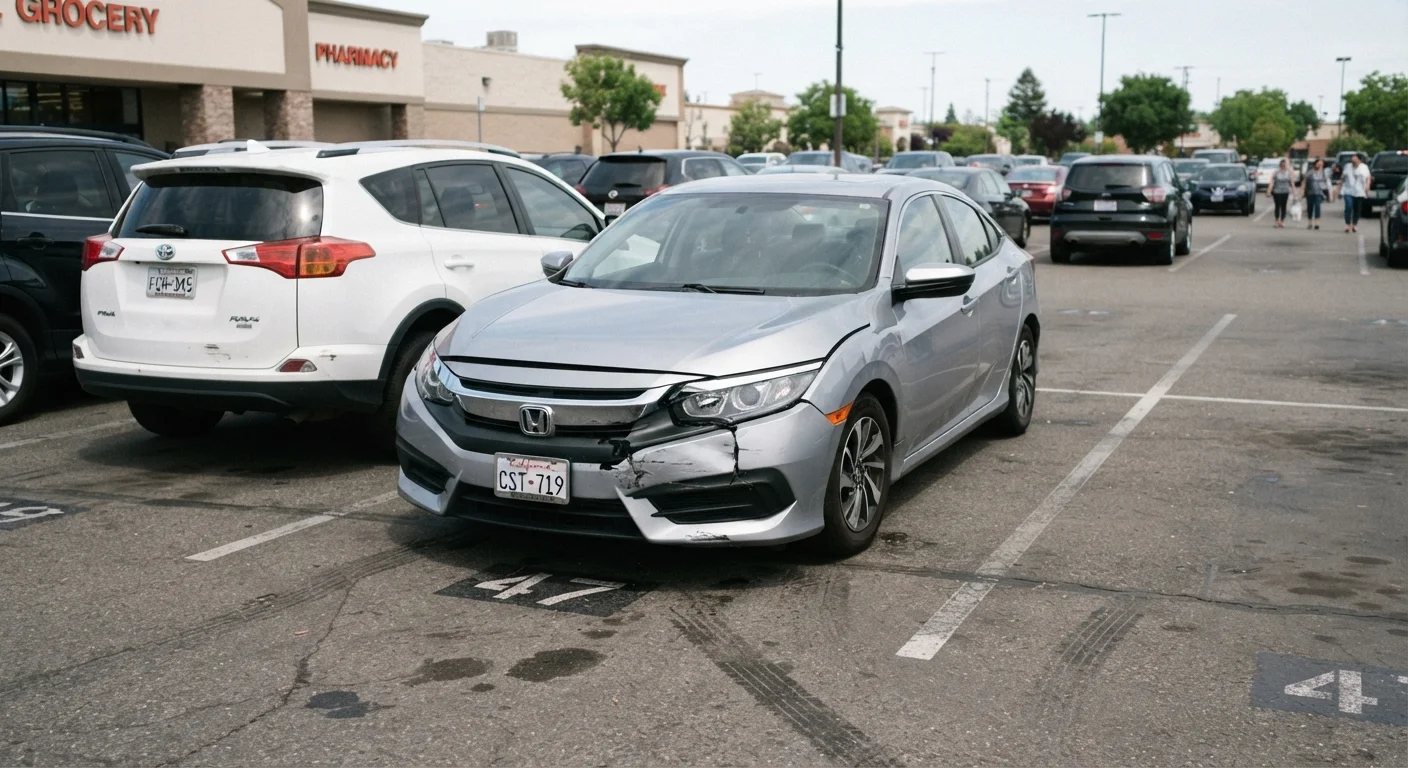
Collision coverage pays to repair or replace your vehicle after a crash, subject to your deductible.
Collision coverage is widely misunderstood. Learn exactly when it applies, what it excludes, and how it interacts with your deductible.
What collision coverage actually covers
Collision coverage pays to repair or replace your vehicle after it makes physical contact with something: another car, a guardrail, a fence, a utility pole, or even a pothole that causes serious suspension damage. The defining feature is contact between your vehicle and another object.
The coverage applies to your car only. If you are at fault in a crash, your liability coverage handles damage to the other driver's vehicle. Collision handles yours. If the other driver is at fault, their liability coverage may pay for your car's repairs, but you can also use your own collision coverage to move the process along without waiting for a fault determination.
See our guide to fault determination for how that process works and why it matters for your claim.
Your insurer pays up to your car's actual cash value (ACV), which is its market value at the time of the loss, accounting for age, mileage, and condition. If the repair estimate exceeds the ACV, the car is typically declared a total loss and you receive the ACV minus your deductible instead of a repair payment.
File or pay out of pocket?
For minor damage close to your deductible amount, paying out of pocket may be worth considering. Filing a collision claim can affect your premium at renewal, even when you were not at fault. Get a repair estimate before deciding, and weigh the cost against a potential rate change.
What collision coverage does not cover
Collision has clear boundaries, and misunderstanding them is where drivers get surprised after a claim.
- Damage from theft, vandalism, hail, flooding, fire, or animals falls under comprehensive coverage, a separate optional add-on. Comprehensive coverage explained walks through exactly what that covers.
- Medical bills for you or your passengers are not part of collision. Personal injury protection (PIP) or medical payments coverage handles those, depending on your state.
- Damage to another driver's vehicle or property is covered by your liability insurance, not collision.
- Personal property inside the car, such as a laptop or phone, is not covered by any auto coverage. Homeowners or renters insurance typically applies to those items.
- Mechanical breakdown unrelated to a crash is excluded entirely.
There are also situations where your policy may not respond at all. When your personal auto policy stops covering you covers scenarios that go beyond standard exclusions.
~$290/yr
Average annual cost of collision coverage
According to the National Association of Insurance Commissioners, the average collision coverage expenditure per insured vehicle was around $290 as of their most recent data report.
6 million+
Police-reported crashes per year in the U.S.
The National Highway Traffic Safety Administration reports roughly 6 million police-reported motor vehicle crashes annually, the majority of which involve vehicle-to-vehicle or vehicle-to-object contact.
How your deductible affects a collision claim
Your deductible is the fixed amount you pay toward a covered repair before your insurer pays the balance. Common deductible amounts range from $250 to $2,000. A $500 deductible on a $4,000 repair means your insurer pays $3,500.
The deductible applies each time you file a collision claim, not once per policy period. If you have two separate incidents in one year, you pay the deductible twice.
Choosing a higher deductible lowers your monthly premium, but raises your out-of-pocket cost when something happens. The trade-offs of raising or lowering your deductible walks through how to think about that math clearly.
Total loss payouts and the gap problem
When a collision results in a total loss, your insurer pays the ACV of your car, not what you originally paid for it. For a car purchased new, depreciation can be significant in the first few years. If you financed the purchase, you may owe more on the loan than the ACV payout covers.
That difference between the insurance payout and the loan balance is what gap insurance addresses. Gap insurance explained covers who it makes sense for and how it works alongside collision.
To understand how insurers arrive at a specific ACV figure after a total loss, see how insurers determine actual cash value.
This article is for general informational purposes only and does not constitute insurance, financial, or legal advice. Coverage terms, exclusions, and requirements vary by insurer, state, and individual policy. Read your policy documents carefully and consult a licensed insurance agent for guidance on your specific situation.
Frequently Asked Questions
The content provided on our blog site traverses numerous categories, offering readers valuable and practical information. Readers can use the editorial team’s research and data to gain more insights into their topics of interest. However, they are requested not to treat the articles as conclusive. The website team cannot be held responsible for differences in data or inaccuracies found across other platforms. Please also note that the site might also miss out on various schemes and offers available that the readers may find more beneficial than the ones we cover.