
Gap Insurance: What It Does and When It Actually Makes Sense

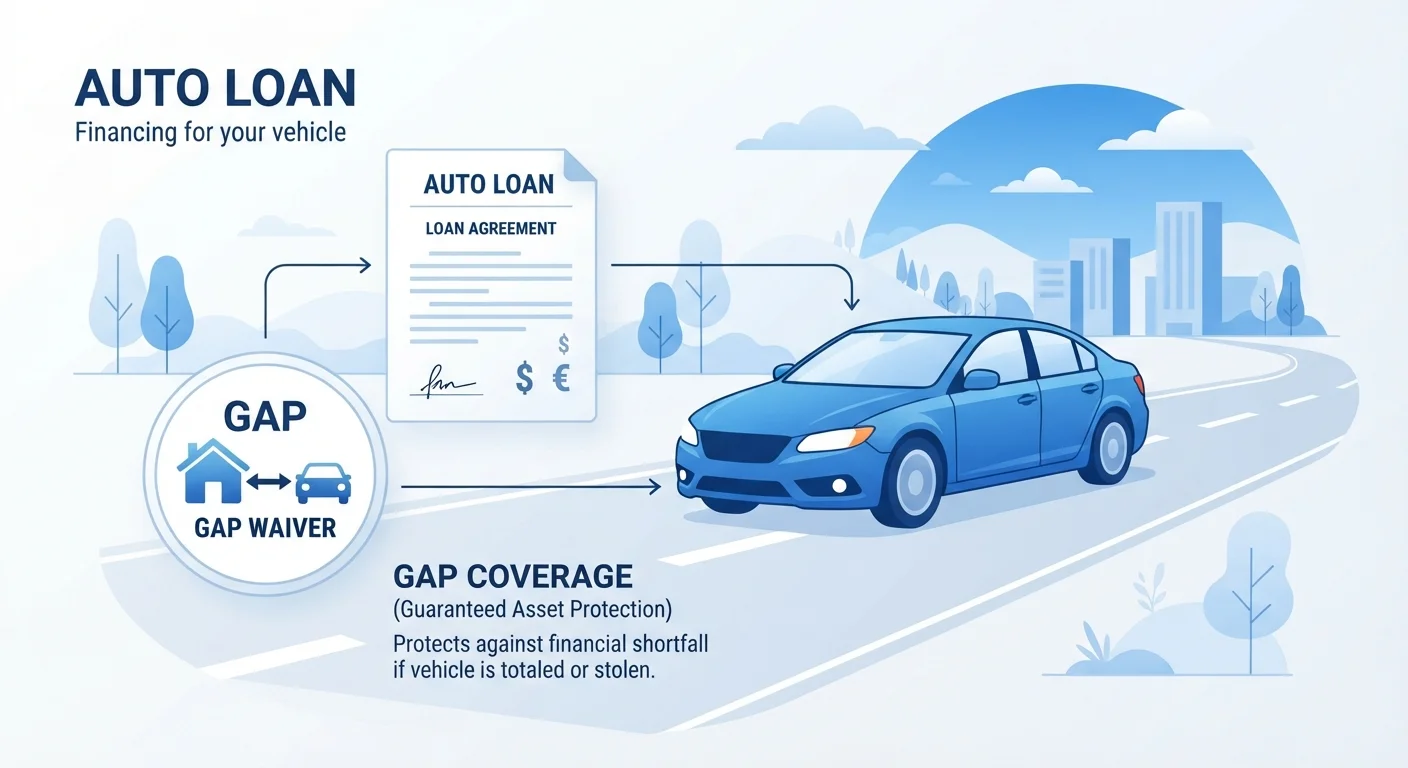
Gap insurance covers the difference between what you owe and what your car is worth.
If you owe more on your car than it's worth, gap insurance can cover the difference after a total loss. Here's how it works and who it's designed for.
The gap problem: why your payout can fall short
When an insurer totals a vehicle, it pays the car's actual cash value at the time of the loss, not what you paid for it or what you still owe. Because new cars depreciate quickly, a vehicle purchased today can be worth several thousand dollars less than its purchase price within the first year. If you financed most of the purchase price, your loan balance may still reflect close to what you paid while the car's market value has already dropped.
That difference is the gap. Without additional coverage, you absorb it out of pocket. On a vehicle financed at $32,000 with a $1,000 down payment, a total loss 14 months later might produce a $24,000 insurance payout while $27,000 remains on the loan. The $3,000 difference is still owed to the lender, regardless of the accident.
To understand how insurers arrive at that payout figure, see how insurers determine your car's actual cash value after a total loss. The calculation method matters because it directly affects whether a gap exists and how large it is.
Who actually needs it
Gap coverage is not useful for every driver. It applies when there is a realistic chance you will owe more than the vehicle is worth at the time of a total loss. Several financing situations raise that probability.
- Financing with little or no down payment leaves you underwater immediately, because the loan balance starts near the full purchase price while the car's value drops the moment it leaves the lot.
- Loan terms of 60 months or longer spread payments out slowly, so the principal balance falls more slowly than depreciation.
- Leased vehicles often require gap coverage by contract, because the lease payoff can exceed the car's residual value after a total loss.
- Rolling negative equity from a previous vehicle into a new loan puts you further into the hole from day one.
If you paid cash, made a substantial down payment, or are near the end of a short loan term, check your current loan balance against a market value estimate. If the balance is already below the value, gap coverage adds nothing.
Check your loan balance before renewing
Once a year, compare your remaining loan balance to a current market value estimate from a source like Kelley Blue Book or NADA Guides. If the balance is already below the value, you may not need to renew gap coverage. Dropping coverage you no longer need reduces your premium without changing your actual protection.
What gap insurance does not cover
Gap coverage has real limits that are worth understanding before purchasing. It does not cover your collision or comprehensive deductible, so if your policy carries a $1,000 deductible, that amount still comes out of your pocket even with gap in place. Some gap products also exclude amounts rolled from a prior loan, extended warranties, or past-due payments added to the current balance.
Gap coverage only triggers after a total loss determination. It does not pay for repairs after a partial loss. Collision coverage handles repair costs when the vehicle is repairable, and comprehensive coverage applies to non-collision losses like theft or weather damage. Gap sits on top of those payouts; it does not replace them.
Fault matters too. If another driver is fully at fault and their liability coverage pays the full value of your vehicle, gap may never come into play. How fault is determined after a car accident explains how that process works and why it affects the final payout.
Where to buy it and what to compare
Gap coverage is sold through three main channels: auto insurers as a policy endorsement, lenders at loan origination, and dealerships as part of the finance-and-insurance process. Prices differ meaningfully across these sources. An insurer add-on typically costs less per year than a one-time dealership fee financed into the loan, which also accrues interest over the loan term.
Before agreeing to gap coverage from any source, confirm what the policy excludes, whether it covers the full loan balance or caps at a percentage of actual cash value, and what happens if you pay off the loan early. A prorated refund policy matters if you plan to refinance or sell the vehicle before the loan ends.
Coverage terms and costs vary by provider and state. This article is general information, not personalized insurance advice. For decisions about your own situation, consult a licensed insurance agent who can review your specific loan terms and policy options.
Frequently Asked Questions
The content provided on our blog site traverses numerous categories, offering readers valuable and practical information. Readers can use the editorial team’s research and data to gain more insights into their topics of interest. However, they are requested not to treat the articles as conclusive. The website team cannot be held responsible for differences in data or inaccuracies found across other platforms. Please also note that the site might also miss out on various schemes and offers available that the readers may find more beneficial than the ones we cover.